mercoledì 4 settembre 2024

Essential Lifting Equipment for Machinery Processing Facilities: A Comprehensive Overview


In the fast-paced world of machinery processing facilities, the efficiency and safety of handling heavy loads are crucial to operational success. Selecting the right lifting equipment not only boosts productivity but also ensures the safety of the workforce and the protection of valuable materials. This article explores the critical types of lifting equipment commonly used in machinery processing facilities, emphasizing their unique features, advantages, and applications.


Overhead Cranes: The Backbone of Industrial Lifting

Overhead cranes are indispensable in any industrial setting, providing a reliable solution for the safe and efficient movement of heavy loads. These cranes, characterized by their bridge-like structure spanning the workspace, are vital in manufacturing plants, assembly lines, and large warehouses. Their ability to handle heavy objects with precision makes them a cornerstone of industrial operations.

Advantages of Overhead Cranes:

  • Operational Efficiency: These cranes modernize lifting tasks, facilitating the swift and precise transport of materials across the facility.
  • Enhanced Safety: By minimizing the need for manual lifting, overhead cranes reduce the risk of workplace injuries.
  • Space Optimization: Operating above ground, these cranes free up valuable floor space, making them ideal for crowded industrial environments.

Gantry Cranes: Versatility Indoors and Outdoors

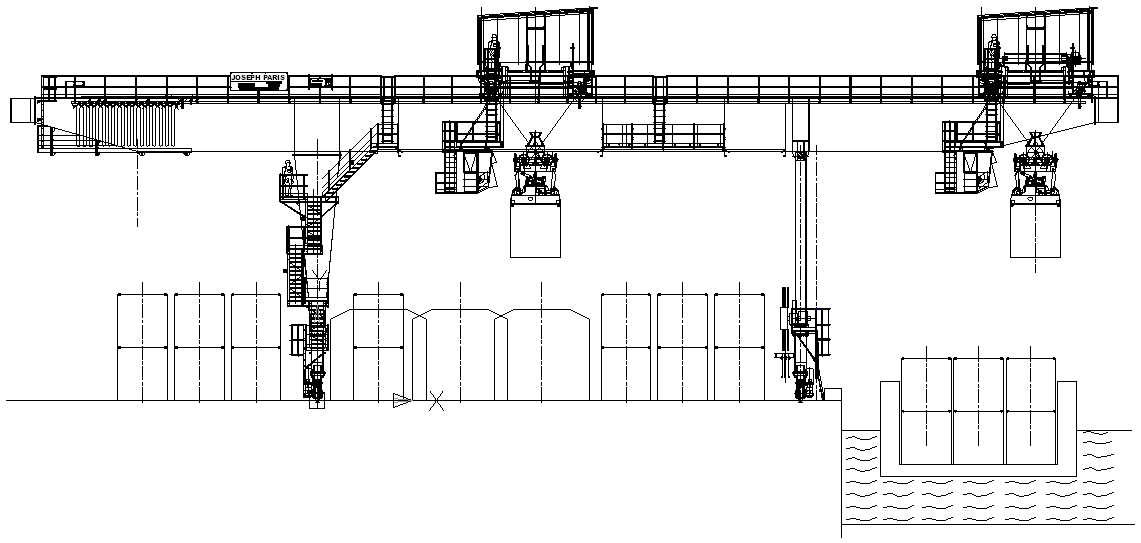
Gantry cranes are another essential tool in heavy lifting, offering the flexibility to be used both indoors and outdoors. Supported by legs that run on tracks or wheels, gantry cranes are perfect for applications requiring the movement of heavy loads across expansive areas, such as in shipyards, construction sites, or large-scale manufacturing facilities.

Advantages of Gantry Cranes:

  • Adaptability: Suitable for various environments, whether inside a plant or out in the field.
  • Mobility: Their ability to be repositioned provides flexibility in handling tasks across different parts of the facility.
  • Heavy-Duty Capability: These cranes are designed to lift substantial loads, making them ideal for demanding industrial tasks.

Jib Cranes: Compact and Versatile

Jib cranes, known for their compact design, are highly effective in smaller workspaces where larger cranes might be impractical. With a horizontal arm (jib) attached to a vertical mast or mounted on a wall, these cranes can rotate up to 360 degrees, making them perfect for tasks requiring repetitive and precise movements, such as in assembly lines or maintenance areas.

Advantages of Jib Cranes:

  • Rotational Flexibility: The 360-degree rotational capability allows for the precise positioning of materials.
  • Space-Saving Design: Their compact structure makes jib cranes ideal for confined spaces, providing efficient lifting solutions where floor space is limited.

Forklifts: The Workhorses of Material Handling

Forklifts are vital in material handling, especially in environments like warehouses, distribution centers, and processing plants. These vehicles, equipped with pronged forks, are designed to lift and move heavy loads, offering excellent mobility and versatility.

Advantages of Forklifts:

  • Superior Maneuverability: Forklifts can easily navigate through tight spaces, facilitating efficient material transport across the facility.
  • Task Versatility: With various attachments available, forklifts can be adapted to handle a wide range of tasks, from moving pallets to transporting bulky machinery.
  • Operational Efficiency: By speeding up material handling processes, forklifts contribute to reduced downtime and increased productivity.

Pallet Jacks: Simplified Pallet Handling

Pallet jacks are essential tools for moving palletized goods within industrial environments. Available in both manual and electric models, these jacks provide an affordable and efficient solution for short-distance material handling, particularly in warehouses and small processing facilities.

Advantages of Pallet Jacks:

  • User-Friendly Operation: Pallet jacks are simple to use, requiring minimal training for effective operation.
  • Cost-Effective: These tools offer an economical option for pallet handling, reducing the need for more expensive equipment.
  • Increased Efficiency: Pallet jacks streamline the process of moving goods, enhancing operational efficiency and reducing the need for manual labor.

Mobile Cranes: Flexibility and Reach

Mobile cranes are highly versatile lifting devices equipped with a telescopic boom mounted on a mobile platform, allowing them to be easily transported across different locations within a facility. They are ideal for construction and maintenance tasks, providing significant lifting capacity and extended reach for handling heavy equipment and materials.

Advantages of Mobile Cranes:

  • Portability: Mobile cranes can be relocated as needed, offering flexibility in handling various lifting tasks.
  • High Lifting Capacity: These cranes are capable of handling heavy-duty lifting operations, making them suitable for a wide range of industrial applications.

Conclusion

In machinery processing facilities, the proper selection and use of lifting equipment are vital for maintaining operational efficiency and safety. From overhead cranes to mobile cranes, each type of equipment plays a crucial role in the seamless handling of heavy loads. By investing in high-quality lifting solutions and maintaining a focus on safety through regular training and equipment maintenance, facilities can achieve optimal performance and ensure the well-being of their workforce.

mercoledì 24 luglio 2024

Dust Management Strategies in the Steel Industry: A Holistic Approach


Dust management in the steel industry is a critical issue that requires a holistic approach. As engineers, we understand that imposing a one-size-fits-all abatement technology is not always the most effective solution. Instead, it is crucial to consider the unique characteristics of each plant and its local environment to achieve optimal results.


Understanding Dust Emissions

Particulate matter (PM) in the atmosphere, commonly known as dust, consists of minuscule solid or liquid particles suspended in the air. These particles can either be of human origin (anthropogenic) or naturally occurring. Dust emissions pose significant challenges due to their detrimental effects on human health and the environment, influencing climate conditions and precipitation patterns.
 
In the steel industry, dust emissions can originate from various processes, including the transport, storage, handling, heating, and transformation of raw materials. Key emissions include particulate matter (PM), sulfur dioxide (SO2), and nitrogen oxides (NOx). Additionally, minor emissions such as dioxins and heavy metals are typically attached to dust particles.
 

A Holistic Approach to Dust Management

Effective dust management in the steel industry involves employing a variety of techniques, with the choice of method largely dependent on plant configuration and local circumstances. Here are key aspects of a holistic dust management strategy:
 

Stack Emissions Control

Stack emissions, released from identifiable point sources, are managed using several control measures:
  • Beneficiation: Removing potential contaminants before further processing.
  • Process Optimization: Enhancing efficiency to achieve more with less.
  • Abatement Technologies: Implementing bag filters, electrostatic precipitators (ESPs), wet scrubbing systems, and other technologies.
  • Monitoring and Maintenance: Regular source monitoring, incident investigation, plant inspections, and targeted maintenance regimes.

Diffuse and Fugitive Emissions Management

Diffuse emissions, originating from areas such as stockpiles and roads, and fugitive emissions, escaping from non-point sources like roof vents, require distinct management practices:
  • Material Handling and Storage: Minimizing material volumes, optimizing stockpile design, and using enclosures for bulk material storage.
  • Transport Activities: Watering roads, applying surface sealants, and using closed transport belts.
  • Proactive Measures: Implementing weather alert systems, ambient monitoring, plant inspections, and risk management systems.

Optimal Regulatory Practices

Regulatory authorities often believe that imposing specific abatement technologies is the key to cutting emissions. However, this approach can be limiting. Instead, authorities should set appropriate emission limits within environmental permits, allowing steel companies the flexibility to select the most suitable technologies and practices. With their comprehensive understanding of operations, steel companies are best positioned to choose effective and sustainable solutions. 

The Importance of Source Apportionment

Understanding which sources contribute most to emissions is crucial for effective dust management. Emission sources within a steel plant can be diverse, making it challenging to accurately determine their individual contributions. Therefore, refining methods for source apportionment is a priority. This refinement will ensure that mitigation efforts are targeted correctly, providing the greatest benefits to society. 

Conclusion

The steel industry's journey towards effective dust management is a testament to its commitment to the environment and technological innovation. By adopting a holistic approach and leveraging advanced abatement technologies, the industry continues to make significant strides in reducing dust emissions. Engineers play a crucial role in this task, ensuring that solutions are tailored to the unique needs of each plant and contribute to a cleaner, healthier environment. As we move forward, ongoing engagement with regulatory authorities and local communities will be essential to address emerging challenges and achieve sustainable air quality improvements.


giovedì 20 giugno 2024

Revolutionizing the Mining Industry with 3D Scanning and Reverse Engineering


Introduction

In the ever-evolving mining industry, a vital sector of the world economy, we are witnessing a profound technological revolution. From high-capacity, highly automated operations to cutting-edge advancements in automation and robotics, safety and efficiency in mining are being elevated to new heights. Innovative technologies such as 3D scanning and reverse engineering are now pivotal, reshaping the industry and setting new standards for success.

The Role of 3D Scanning in Mining

3D scanning technology has emerged as a pivotal tool in the mining industry. Laser scanning systems, renowned for their speed, accuracy, and safety, can capture the spatial coordinates of objects, creating detailed point clouds that represent scanned objects. These point clouds are then processed into 3D models using CAD software, offering numerous applications in mining operations.

Aerial Inspection and Surveying

Drones equipped with 3D scanners are revolutionizing mining surveys. They provide a quick and cost-effective way to collect precise airborne data, which is essential for improving production planning, safety, and inventory management. By capturing images from various angles and processing them through photogrammetry software, drones can create 3D maps and digital terrain models. This capability is invaluable for tasks such as surveying, mapping, stockpile management, and mining exploration.

Longwall Systems and Mechanical Engineering

Longwall mining systems, used for efficient underground coal extraction, involve complex mechanical systems like gearboxes, conveyors, and shearers. Maintaining these systems is crucial for continuous operation. Mechanical engineers utilize 3D scanning to inspect and model components, facilitating the repair and optimization of mining equipment. This not only ensures operational efficiency but also enhances safety and reduces downtime.

CAD Design and Digital Twins

In the realm of the mining sector, CAD design emerges as a vital player, providing essential support for the development and upkeep of intricate machinery functioning in challenging conditions. Utilizing digital tools, engineers craft new equipment and revamp current machinery. The concept of digital twins, mirroring physical systems virtually, empowers engineers to conduct FEM analysis, scrutinizing components digitally prior to real-world implementation. Through this virtual prototyping process, early detection of possible challenges enhances the refinement and performance of mining equipment designs.

Reverse Engineering: Enhancing Maintenance and Innovation

Reverse engineering involves deconstructing existing products to understand their design and functionality. In the mining industry, this technique is crucial for maintenance and repair. Often, mining equipment operates under extreme conditions, leading to wear and tear. When original design documents are unavailable, reverse engineering allows engineers to recreate parts or improve existing systems. 3D scanning facilitates this process by providing accurate digital models of the components, which can then be analyzed and reproduced.

Underground Mining Surveys

3D scanning is extensively used in underground mining to survey tunnels and infrastructure. It helps in assessing the contour of tunnel linings and other underground structures, ensuring stability and safety. The technology is also gaining traction in quarries for topographic mapping and monitoring, enabling precise planning and resource management.

Equipment Maintenance

Maintaining heavy-duty mining equipment is challenging due to the complexity and harsh operational environments. Portable 3D scanners allow engineers to quickly and accurately measure and inspect parts, especially those with intricate geometries. This accelerates maintenance processes, reduces downtime, and enhances overall equipment reliability.

Conclusion

The incorporation of 3D scanning and reverse engineering within the mining sector presents significant advantages, spanning enhanced safety, efficiency, and decreased operational expenses. These cutting-edge technologies facilitate thorough inspections, precise data gathering, and the development of digital models that support maintenance and innovation.

As the mining field progresses, the adoption of these advanced tools becomes pivotal for advancing future achievements and sustainability. Harnessing the capabilities of 3D scanning and reverse engineering empowers mining operations to attain elevated levels of accuracy and effectiveness, fostering a more resilient and forward-looking industry.